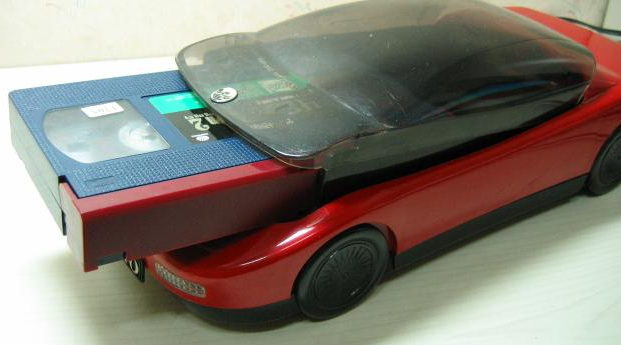
Easily mistaken as a model car or children’s toy, VHS rewinders of the past were a colorful reflection of physical media collectors in the past. Tangible, simple, and visually interesting. Fast forward today where everything is locked behind streaming service memberships, people are starting to reminisce about an era where things were simpler, and not only *somehow* simpler, but also visually reflected a person’s tastes and character. A wall of VHS’s says a lot about a person. A display of model car VHS rewinders? Now that’s a serious collector!
If you are an elder Millennial who was born at the end of the VHS era, you might faintly recall these glorious novelties. Gen-X though? They likely remember actually using them to rewind favorite movies. If you’ve never heard of these, or like most people only ever used a VHS player to rewind movies.
For a real-life example, here are 2 I recently found amongst a pile of old novelty phones modeled after race cars.
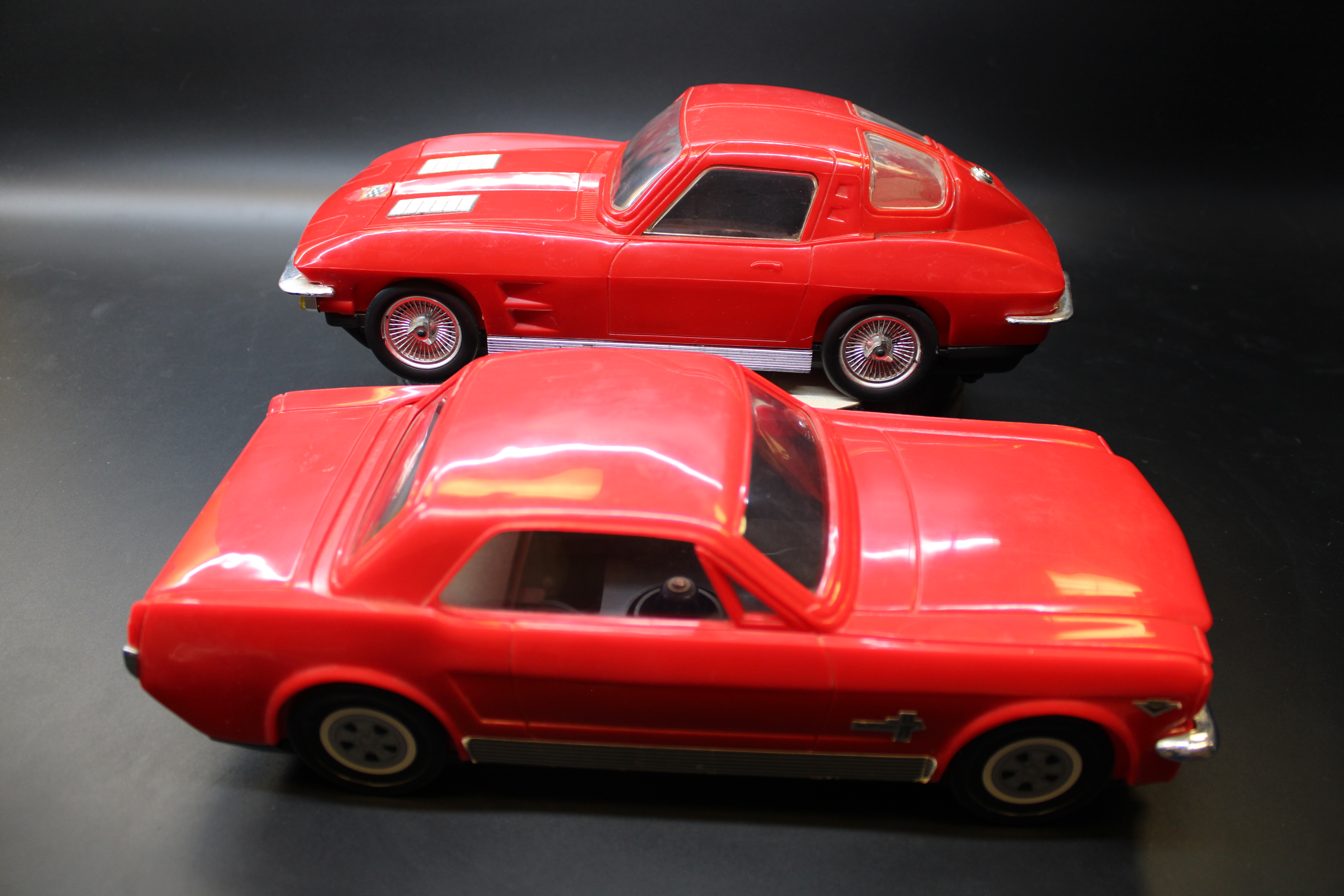
This example is from our own listing – Corvette & Mustang VHS Rewinders. It ended up selling for roughly $40, with each car costing about $20. This was priced well under other listings that were around $30+ for a single car (with power adapter included). Prices these days on eBay are all over the map… but we’ll get to that later.
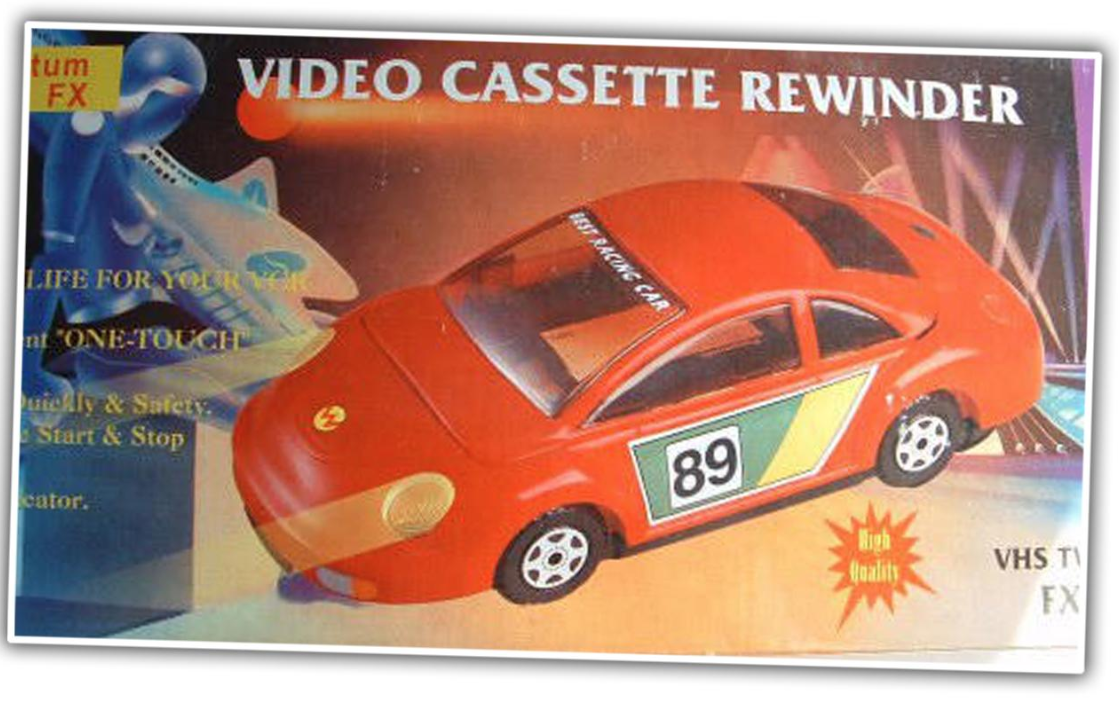
This was a brief, oddly magical moment in the golden age of home video when even rewinding a tape felt like part of the experience.
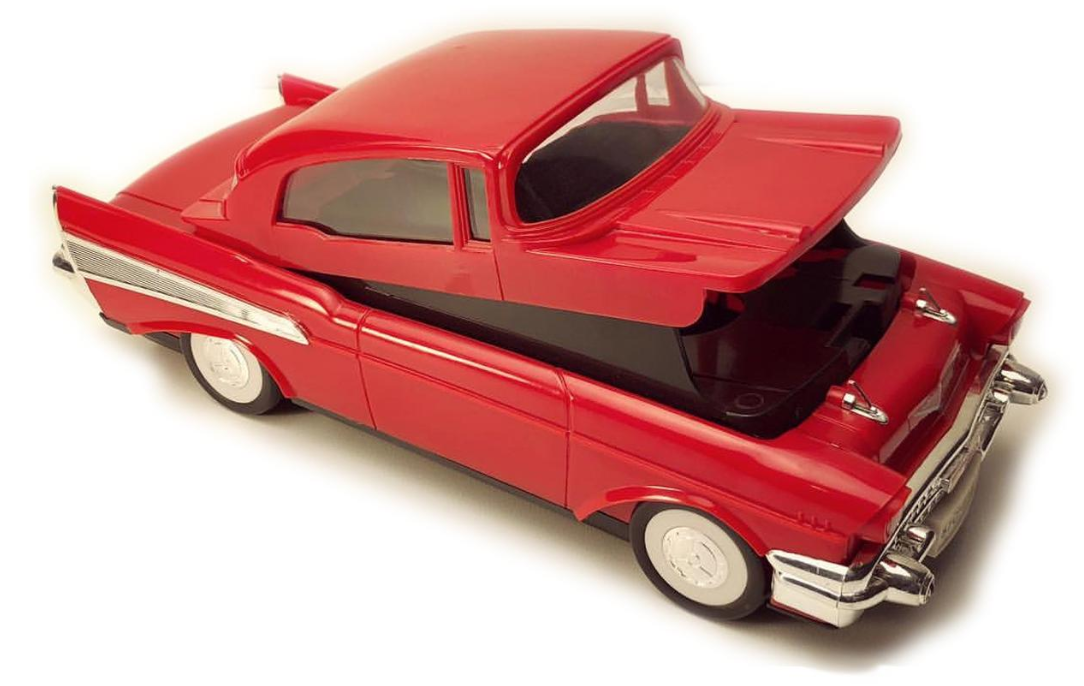
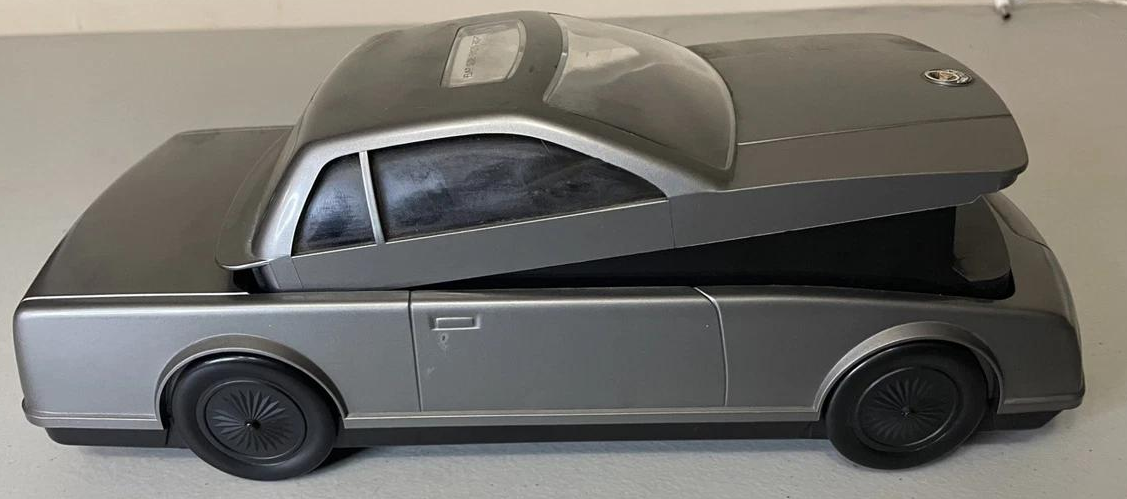
Before streaming, before DVDs quietly replaced the whirring ritual, there was the unmistakable clunk of a VHS sliding into a machine that looked like a toy. Not just any toy—a sleek sports car, a cartoonish hot rod, sometimes even a miniature muscle car with glowing headlights. You didn’t just rewind your movie… you popped the hood of a miniature car. It was an experience.
And that was the point.
The novelty-everything era
There was a time when everyday electronics didn’t just work—they had personality.
Remember Garfield the cat and football phones?
Throughout the late ’80s and ’90s, a wave of novelty design swept through household tech. Ordinary items were reimagined as playful, conversation-starting objects. Telephones became hamburgers, cartoon cats, footballs, even classic cars. They rang, they dialed… but more importantly, they made people smile.
This same spirit carried over into VHS rewinders. Instead of a plain black box, you got a miniature sports car sitting next to your TV. You didn’t just rewind a tape—you “popped the hood” and watched it come to life.
It wasn’t about efficiency. It was about experience.
These novelty items reflected a moment when technology was becoming more accessible, more personal—and a little less serious. As electronics moved into every room of the house, designers leaned into fun, turning utility into decor, and function into something you could show off.
Looking back, it’s easy to see these pieces as kitsch. But at the time, they represented something bigger: a brief era where even the most mundane parts of daily life were given a sense of imagination.
Why these existed
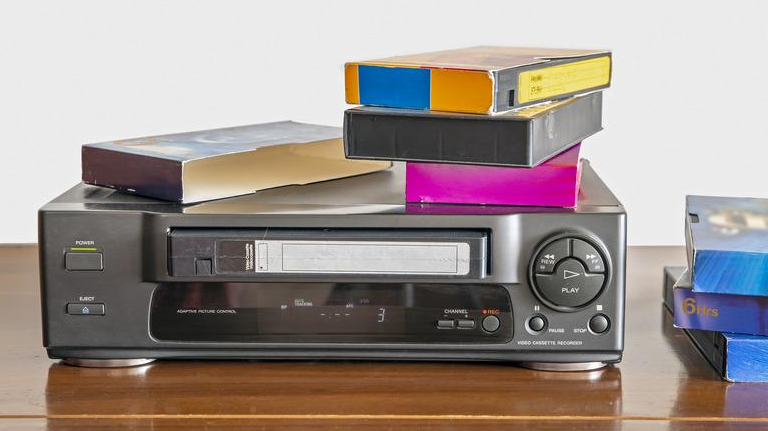
Rewinding tapes inside your VCR—like a Panasonic VCR or a Sony VHS player—put wear and tear on the machine. For families who rented movies every weekend, that mattered. Dedicated rewinders weren’t just faster—they were a kind of insurance policy. Save the VCR for watching, let the rewinder take the abuse.
But manufacturers knew something else: this was a chance to make a mundane chore fun. So they leaned into novelty. Suddenly, rewinding became a ritual—drop the tape into the “engine bay,” close the hood, see the headlights and listen as it roared (well, whirred) back to the beginning.
Who bought them
These weren’t just for movie collectors —they were for everyone who cared about their tapes. Families with towering shelves of recorded TV. Kids who watched the same movie ten times a week. And eventually, collectors—people who took pride in their media and wanted the full experience, start to finish.
Back then, there was also a subtle cultural nudge behind them:
“Be kind, rewind”, the unforgettable phrase of movie rental shops.
Popularized by chains like Blockbuster, that phrase wasn’t just a suggestion—it was a social contract. Return your tape rewound, or pay the price (sometimes literally). These little car-shaped machines made it easier—and a lot more fun—to keep your end of the deal.
Where you’d find them new
If you were shopping in the late ’80s or ’90s, these rewinders were everywhere that felt just slightly magical:
- Electronics aisles at big-box stores like Walmart
- Catalogs from Sharper Image, where novelty met luxury
- Endcaps and impulse-buy shelves at video rental stores
- Holiday gift sections, where they became the “perfect quirky add-on”
- Radioshack in both cities and rural communities, that became THE place for electronics
They were rarely essential—but always tempting.
The quiet phase-out
By the early 2000s, the ritual started to fade.
As DVDs took over—and rewinding became irrelevant—VHS rewinders were suddenly one extra step in a process that no longer existed. The little car on your shelf stopped “working,” not because it broke, but because the world around it moved on.
For a while, they lingered. Tucked next to the TV. Still plugged in. Still capable. But used less and less.
Then came the clean-outs.
When people finally let them go, rewinders rarely left alone. They were swept into boxes alongside the rest of a disappearing era:
- Chunky corded landline phones
- Dusty answering machines with blinking red LEDs
- Milk crates of worn VHS tapes (some labeled, most not)
- Universal remotes that never quite worked right
- Coax splitters, RCA cables, and tangled power adapters
- The occasional VCR combo unit that “still worked last time we tried it”
- Straight into the trash bin
These weren’t just objects—they were parts of a system that no longer had a place. And so they exited together, usually through garage sales, thrift store drop-offs, or the quiet back corner of a basement.
That’s part of what makes the VHS rewinder so memorable now. It wasn’t just replaced—it was orphaned. A device built for a single purpose, in a world that stopped needing it almost overnight.
What they’re worth now
The funny thing about novelty VHS rewinders is that they’ve quietly become collectible with the resurgence of physical media.
In my own case, I listed a pair of model car rewinders—no power adapters included—for about $40 total, putting them at roughly $20 each. They sold quickly. That alone tells you something about demand: even incomplete units can move fast at the right price.
At the time of listing, it was common to see single car-style rewinders selling for $30 or more when they included the original power adapter. Condition played a role, but not always as much as you’d expect—buyers were often more interested in the novelty and display value than perfect functionality.
A few patterns stand out:
- Style matters – Sleek sports car designs tend to command higher prices than bulkier or more generic models.
- Completeness helps, but isn’t everything – Having the original power adapter can push value up, but many buyers are willing to source replacements.
- Nostalgia drives pricing – These aren’t being bought purely as electronics—they’re being bought as memory pieces.
- Supply is inconsistent – They show up in waves (estate sales, clean-outs), which creates small spikes in availability and pricing.
- Condition matters – It must be visually appealing and in modest shape. Small scratches and scuffs are acceptable… but dents, cracks, and missing stickers or pieces is a deal-breaker. Inspect very closely, as some of these cars have very small plastic pieces on the outside of the car that are easily missed.
- Function matters – It’s best if it actually rewind tapes. If it doesn’t, but looks cosmetically brilliant, there’s still some value. You should really think of it like this from the mind of a VHS collector: will it look great on a shelf or display case, and is it demonstrable? Collectors love showing off their pieces.
What was once a $15–$25 impulse gadget has, in some cases, circled back to that same price point—or higher—decades later. Not because it’s useful, but because it represents a very specific, very tangible moment in time.
If I were you, I’d keep an eye out for these now before they explode in value. Physical media collecting is on the cusp of what appears to be a massive resurgence and like with many other viral collecting trends, it’s just a matter of time before greed sets in… hard.
Where you find them now
Today, they sit in thrift stores, estate sales, eBay (like this listing of ours that sold extremely fast, wink-wink), and physical media collector shelves, often mistaken for toys by people who never lived through the ritual. If you’re out in the wild, you’ll often find them in the same bin as old landline phones, or in the toy isle mistaken for a children’s toy.
The catch: usually they are missing the DC 120v 200mA power adapter. The good news is that many plug in adapters for older internet modems or routers will work, and you can easily find replacements online brand new. Frankly, there’s a very good chance you already have a compatible adapter but just don’t realize it.
Another catch: sometimes the headlights don’t work. But, if you take a look inside you will often find old-school christmas lights (mini incandescent christmas bulbs), the kind that were on every christmas lights string in the 90’s – 00’s. These are replaceable, but most collectors don’t even use the rewinders themselves, and are forgiving if a light is burnt out.
The biggest thing, is if it actually rewinds tapes.
When testing one, check to see if the lights power on as it’s common for them to be burned out. Loading a tape is fairly straight forward: press the license plate button, slide in a tape, and shut the hood (or trunk in some cases). If it doesn’t run, the lid won’t latch and you’ve entered the tape in the wrong way -flip tape over and try again. There’s no abort button so be prepared to let it finish rewinding. Once it’s done the hood will conveniently pop back up.
Because this wasn’t just about rewinding a tape.
It was about participating in your media—touching it, hearing it, caring for it. This is what drives many physical media collectors today.
And for a generation, even something as simple as pressing rewind…
came with headlights, horsepower, and a little bit of imagination.
And it was good.