If you’ve ever looked up at the peak of an old farmhouse or barn and seen a rooster spinning above the roofline, you’ve seen one of America’s most iconic rural artifacts: the weathervane.
But not all weathervanes are created equal.
Some are true antiques dating back to the 1800s. Others are modern reproductions made to look antique. And then there’s a large middle category—well-made, mid-20th-century pieces like those from Whitehall—that often confuse collectors.
At first glance, a mid-century weathervane sitting amongst early 1900’s antiques, can fit right in.
If like me, you’ve found one marked “Whitehall Studios Inc. 1956,” you’ve stumbled into that exact gray area.
To be clear: it’s not a bad thing to find a mid-century weathervane, as they still have value and are desirable.
As an example, we currently have a 1956 Whitehall Metal Studios weathervane available—an authentic mid-century piece that reflects the revival era discussed above. It’s a fun piece because it reflects the desire of that era’s modern, car-driving hard working public to maintain a connection to their roots.
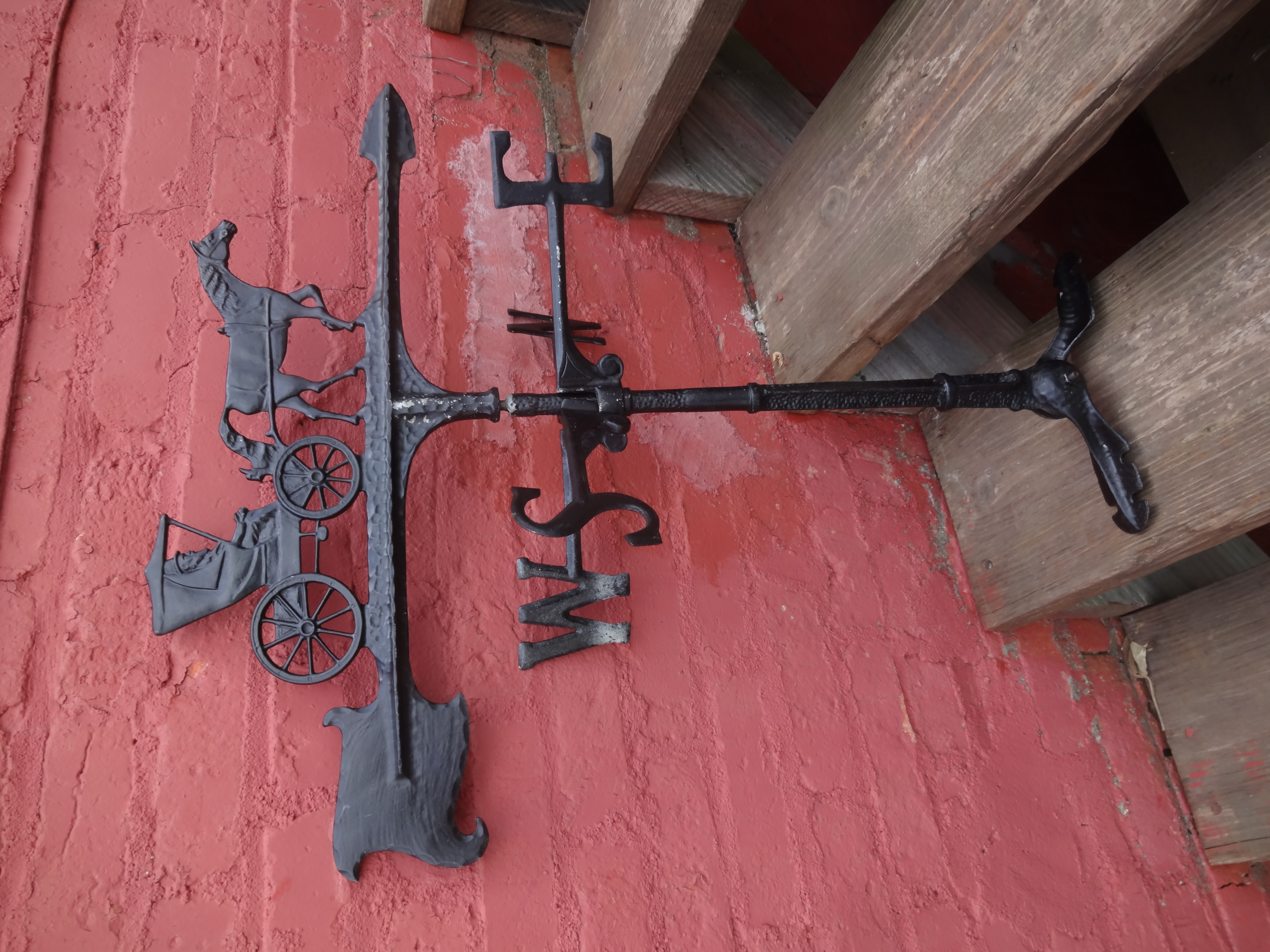
If you’d like to take a closer look, you can find the listing here: Vintage Whitehall Horse & Buggy Weathervane.
Alright, let’s now break it down.
What Is a Weathervane?
A weathervane is a wind-direction indicator mounted at the highest point of a structure. It consists of:
- A fixed set of directional arms (N, S, E, W)
- A rotating figure (arrow, rooster, animal, etc.)
- A central rod that allows it to spin freely
The figure always points into the wind, making it both functional and decorative.
A Brief History of Weathervanes
Weathervanes date back over 2,000 years, but in the United States they became especially popular during the 18th and 19th centuries.
By the 1800s:
- Nearly every barn or farmhouse had one
- Designs became more artistic and symbolic
- Copper was the dominant material for higher-end pieces
Popular antique motifs included:
- Roosters (symbol of vigilance)
- Horses (strength and farm identity)
- Arrows (simple and functional)
- Eagles (patriotism)
By the early 1900s, their practical use declined as weather forecasting improved—but their aesthetic value never disappeared.
The Mid-20th Century Resurgence
Weathervanes experienced a revival starting in the 1940s–1960s, driven by:
- Nostalgia for rural Americana
- Growth of suburban homes styled after farmhouses
- Increased interest in decorative yard and roof elements
This is where companies like Whitehall Products entered the picture.
The Whitehall Era: Vintage, Not Antique
Whitehall (often marked “Whitehall Metal Studios” or “Whitehall Studios Inc.”) became one of the most recognizable makers of decorative weathervanes in the mid-20th century.
Key characteristics of Whitehall weathervanes:
- Material: Cast aluminum (not iron or copper)
- Finish: Typically painted black or bronze
- Weight: Lightweight compared to true antiques
- Markings: Often stamped with a date (like 1956) and company name
- Construction: Clean, consistent casting with fewer hand-worked details
Why they’re often mistaken for antiques
Whitehall pieces were intentionally designed to mimic:
- Traditional farm motifs
- Classic silhouettes
- Aged or rustic finishes
Because of this, they look like 19th-century pieces—but they are actually mid-century decorative reproductions.
Are they collectible?
Yes—but in a different category:
- Not “early American antiques”
- Considered vintage Americana décor
- Value is typically modest but steady
- Desirable for farmhouse-style decorating and resale shops
How to Identify a True Antique Weathervane
If you’re trying to determine whether a piece is truly antique, here are the most reliable indicators:
1. Material
- Antique: Copper or heavy wrought/cast iron
- Whitehall/Reproduction: Cast aluminum
A quick test:
- Aluminum = light, shiny when scratched, no rust
- Iron = heavy, rusts
- Copper = develops green patina
2. Weight
- Antiques are substantially heavier
- Reproductions feel surprisingly light
3. Construction Details
- Antique:
- Hand-cut or hand-soldered seams
- Irregularities in shape
- Signs of repair over time
- Reproduction/Whitehall:
- Uniform casting
- Clean, symmetrical edges
- Minimal variation
4. Maker’s Marks
- Antique: Often unmarked or from obscure makers
- Whitehall: Clearly stamped with company name and sometimes a year
If you see:
- “Whitehall”
- “Whitehall Studios”
- “Whitehall Products Inc.”
…it is almost certainly mid-20th century or newer.
5. Patina vs Paint
- Antique copper: Natural aging (green, brown, uneven)
- Whitehall: Painted finish (black or bronze), with bright metal showing through scratches
Reproductions vs Vintage: Why It Matters
Understanding the difference helps you:
- Price items correctly in a resale setting
- Avoid overpaying at auctions or estate sales
- Market items honestly and effectively
A Whitehall weathervane isn’t a 19th-century relic—but it is a durable, attractive piece of mid-century design that fits perfectly into modern farmhouse aesthetics.
Spotting a Mid-Century Weathervane (Whitehall as an Example)
One of the easiest ways to identify a mid-century weathervane—especially those made by Whitehall—is by how it’s constructed.
Unlike early antiques, these were designed for mass production, easy shipping, and simple installation.
Common Mid-Century Features
Using a typical Whitehall Products weathervane as an example:
- Breaks down into multiple pieces
Usually separates into 3–4 parts (arrow/figure, directional arms, rod, and base) - Screw-tightened directional arms
The N/S/E/W crosspiece is often secured with small set screws or threaded fittings - Adjustable mounting base
A pivoting or angled foot with a nut-and-bolt tightening system, allowing it to be mounted on different roof pitches - Lightweight construction
Made from cast aluminum, making it easy to handle and install - Painted finish with bright metal underneath
Typically black or bronze paint; scratches reveal shiny silver-colored metal, not rust
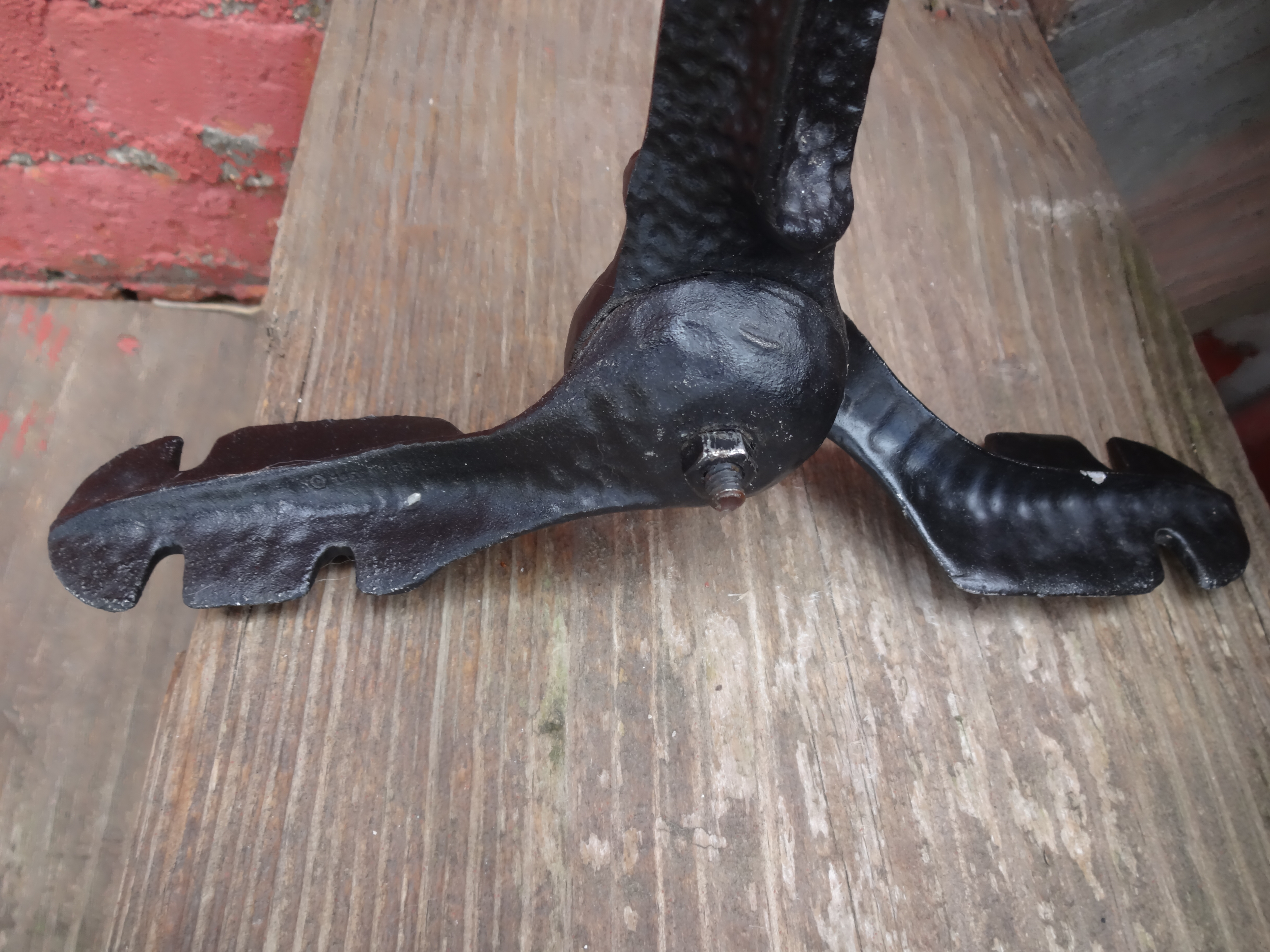
How This Differs from True Antique Weathervanes
Older weathervanes were built very differently:
- Fixed construction
Often not designed to come apart; components may be permanently joined or riveted - Heavier materials
Made from copper or iron, giving them substantial weight - Simpler or integrated mounting bases
Frequently feature a fixed base, sometimes with a three-footed (tripod-style) mount for stability - No modern fasteners
Rarely use machine screws or standardized bolts; instead, you’ll see hand-worked joins - Natural aging instead of paint wear
Copper develops patina; iron rusts—no bright, shiny metal showing through like aluminum
Why This Matters
These construction differences are often more reliable than appearance alone.
A piece might look antique—but if it:
- unscrews easily
- adjusts with a bolt
- and feels surprisingly light
…it’s almost certainly a mid-century reproduction rather than a 19th-century original.
And that’s not a drawback—it just tells you which chapter of weathervane history you’re holding.
Final Thoughts
Weathervanes sit at the intersection of function, art, and identity. Whether it’s a hand-hammered copper horse from the 1800s or a 1956 Whitehall rooster, each piece tells a story about the era it came from.
Your Whitehall piece isn’t pretending to be history—it’s part of a revival of history.
And in many ways, that makes it just as interesting.
If you’re reselling or showcasing one, consider leaning into that narrative:
“Mid-century farmhouse revival piece inspired by classic American weathervanes.”
That framing resonates far more with today’s buyers than simply calling it “old.”